OEM sheet metal manufacturing · Dongguan, Chinasales01@xinghaoxin.comTalk to our team ↗
Power Distribution Cabinets
CUSTOM XHX ENCLOSURE

Power Distribution Cabinets

Large-format enclosures designed around power distribution and protection needs.

  • Free DFM review
  • From 1 piece
  • ISO 9001 quality system
  • Quote with findings

Built to your drawings · OEM / ODM · Dongguan, China

POWER DISTRIBUTION CABINETS

Large frames that stay
square under load.

Distribution cabinets are the largest and heaviest enclosures we build. They carry breakers, busbars, metering and protection gear, and they are usually assembled, lifted and installed by someone other than the people who built them. Everything about the design has to survive that handover.

Structure first, panels second

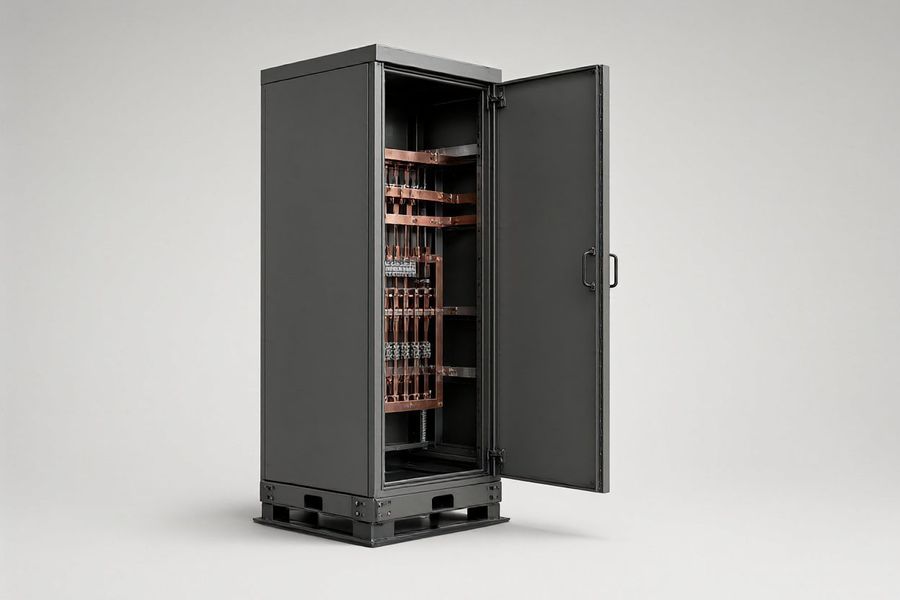
A distribution cabinet that distorts when it is lifted will not close during installation. The base, frame and lifting points are designed as a structure, with bracing that keeps the cabinet square while it is being moved and while the door load is applied. Panels come after the structure is sound.

Compartment sizing follows the single-line diagram

Breaker compartment heights, busbar clearances, metering positions and cable termination space all come from the electrical design. We build the metalwork to those dimensions rather than offering a standard compartment and asking the electrical designer to fit into it.

Built for the installation, not the workshop

The cabinet has to be manoeuvred through a door, stood on a plinth and connected to cables that arrive from a direction somebody already decided. Lifting points, base access, cable entry side and door removal are all agreed at drawing review, because those are the details that decide whether installation takes a morning or a week.

Free-standing power distribution cabinet with lifting base

MATERIAL SELECTION

Choosing the material
for the real exposure.

The grade is decided by where the enclosure lives and how it is cleaned — not by what is cheapest on the day.

Carbon steel at structural gauge

The normal choice for the frame and panels: stiff, weldable and predictable under load. Gauge is chosen from the compartment span and the equipment weight rather than from a standard stock size. Powder coated inside and out.

Best for: indoor switch rooms, substations, equipment rooms

Galvanized steel

Used where the cabinet may be cut or drilled during installation, or where the internal environment is damp. The zinc layer protects the cut edges that a coating cannot reach.

Best for: damp equipment rooms, field-modified cabinets

304 / 316 stainless

Specified for coastal substations, chemical works and wash-down areas. 316 where chlorides are present. The frame is normally welded and the visible faces brushed rather than painted.

Best for: coastal, chemical, wash-down installations

Aluminium for weight-limited retrofits

Occasionally used where an existing concrete base or structure cannot take a steel cabinet. The trade-off is stiffness, so the frame design changes rather than simply swapping the material.

Best for: retrofit into weight-restricted buildings

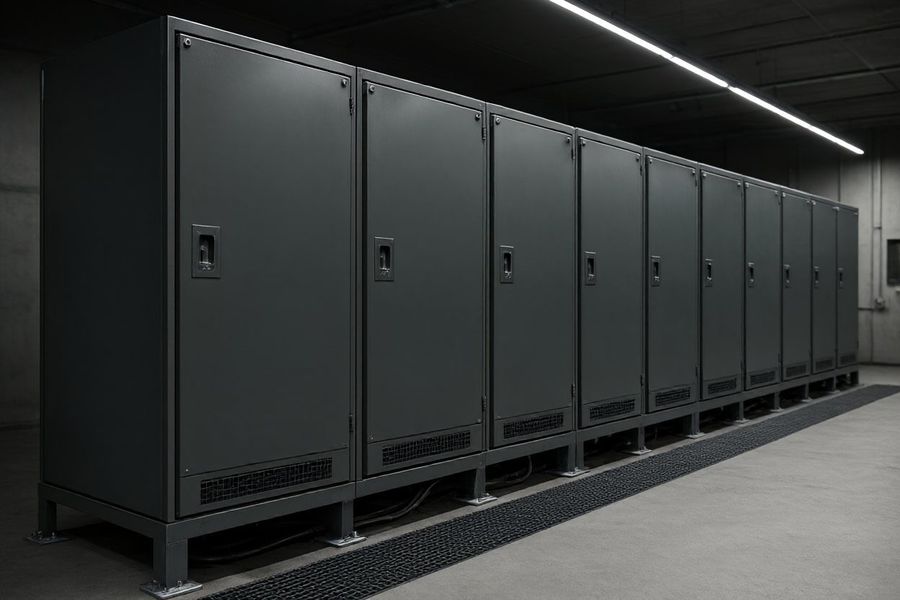
Row of distribution cabinets in a switchroom

From the workshop — the same drawing-led process on every build.

WHERE IT IS INSTALLED

Applications and
what drives each one.

The same product behaves differently depending on where it goes. These are the installations we build for and the constraint that shapes each.

01

Substation and switchroom cabinets

Free-standing distribution and protection cabinets, usually with front and rear access. Compartment layouts follow the protection scheme, and cable entry is sized for the incoming and outgoing feeder schedule.

02

Factory main distribution

The cabinet that feeds a production hall: large incoming breaker, metering, and a row of outgoing ways. Busbar clearance and termination space drive the internal depth, so the cabinet is deeper than a control panel of the same footprint.

03

Building main switchboards

Floor-standing assemblies in commercial buildings, often installed in a basement riser with a tight door width. Sectional construction and bolt-together joints let a large board reach a space a single-frame cabinet could not.

04

Renewable and storage interconnections

Distribution cabinets linking PV inverters or battery systems to the premises network, where DC and AC sections are kept apart and clearances follow the relevant standard rather than general practice.

QUESTIONS

What buyers ask
about this product.

How large a cabinet can you fabricate in one piece?

3,000 mm on the longest dimension. Beyond that we design bolt-together sections that ship within container limits and assemble rigidly during installation — the section split is decided at drawing review.

Do you design the busbar arrangement?

We fabricate the enclosure and internal structure to accommodate your busbar layout. The busbar itself is normally supplied to your specification; give us the arrangement and we size the compartments and clearances around it.

How do you make sure the cabinet stays square?

The frame is welded and braced, and the doors are fitted with the structure under load rather than on a flat bench. Cabinets that need mechanical handling get designed lifting points so the load path does not run through the panels.

Can you supply it assembled and tested?

We can supply the metalwork, the assembled cabinet with hardware and agreed sub-assemblies fitted, or a fully assembled unit. Electrical testing is normally done by your panel builder or during installation — tell us where the scope ends.

What documentation comes with a distribution cabinet?

A dimensional inspection report against the approved drawing, material certificates and a certificate of origin. Third-party inspection is welcome at any step and can be built into the production plan.

START A PROJECT

Send the drawing.
Get the findings back.

Engineering reviews manufacturability and returns the open questions with the quotation — before you commit to production.