OEM sheet metal manufacturing · Dongguan, Chinasales01@xinghaoxin.comTalk to our team ↗
Battery Storage Cabinets
CUSTOM XHX ENCLOSURE

Battery Storage Cabinets

Cabinet structures for energy storage systems and associated electrical equipment.

  • Free DFM review
  • From 1 piece
  • ISO 9001 quality system
  • Quote with findings

Built to your drawings · OEM / ODM · Dongguan, China

BATTERY STORAGE CABINET STRUCTURES

Carrying weight,
removing heat.

A battery cabinet has two jobs that pull against each other. The structure has to carry a dense, heavy load without sagging, and the same closed volume has to remove continuous heat from equipment that generates it all the time. Getting one right at the expense of the other is the usual failure.

Load path before anything else

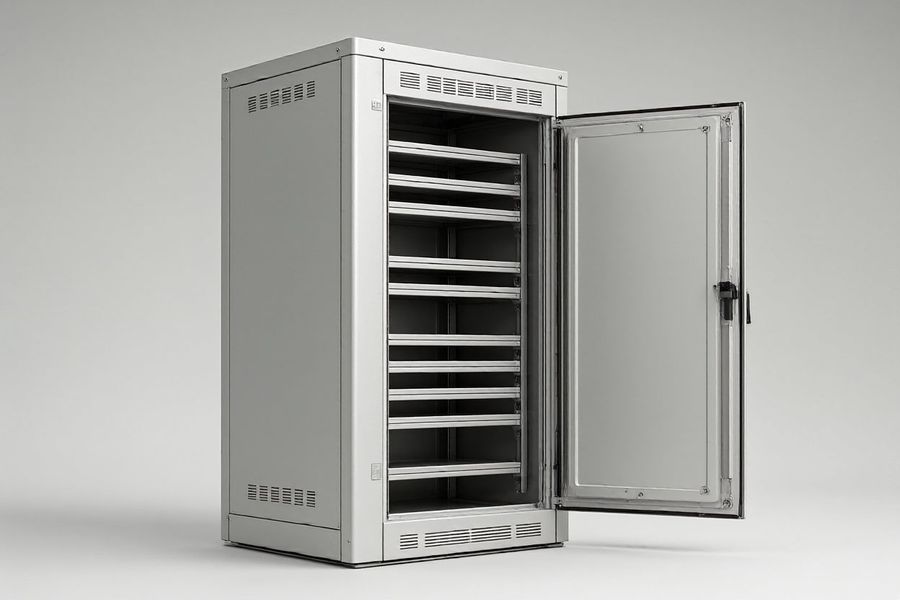
Battery modules are heavy and they sit on racks. The rack supports, the shelf depth and the base all have to carry that load without deflecting, because a rack that sags puts stress on the modules and makes extraction difficult. We size the structure from the module weight and the number of tiers, not from a standard cabinet.

Thermal provisions sized to the duty cycle

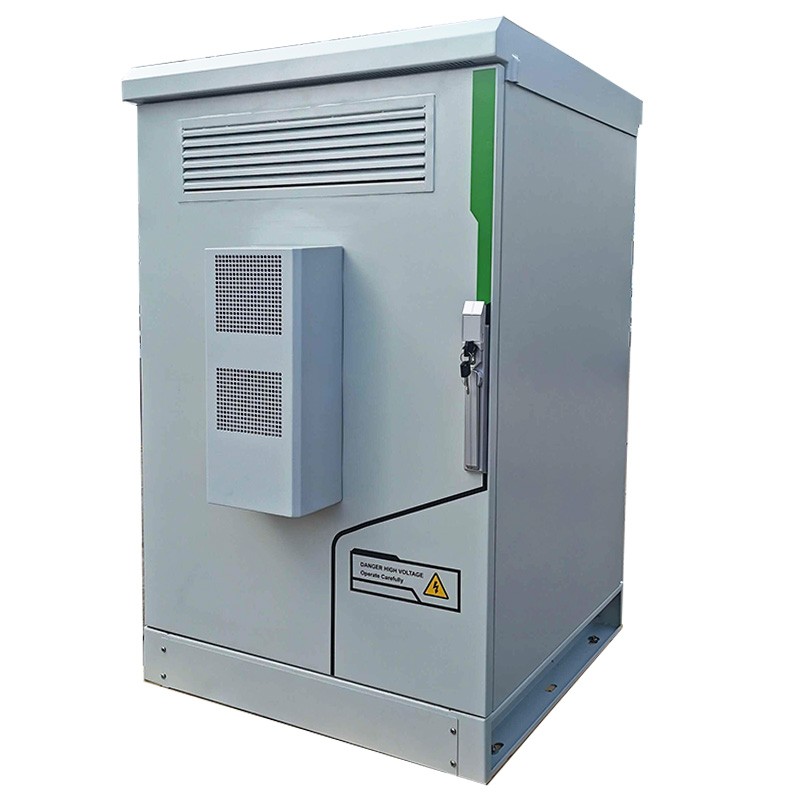
Battery equipment produces heat continuously, not in bursts. The ventilation, fan or heat-exchanger provision is sized against the real continuous load rather than a nominal figure, and it is shown on the drawing so the thermal design can be checked before fabrication.

Service access designed with the installation

Modules have to come out for maintenance and occasionally for replacement. Front access, removable panels, and the clearance needed to slide a module out are all agreed at drawing review, because a cabinet that cannot be serviced in place becomes a crane job.

Battery storage cabinet with rack shelves

MATERIAL SELECTION

Choosing the material
for the real exposure.

The grade is decided by where the enclosure lives and how it is cleaned — not by what is cheapest on the day.

Carbon steel at structural gauge

The normal choice for indoor energy storage: stiff, weldable and predictable. Gauge is chosen from the rack span and the loaded weight, and the base is reinforced where the cabinet sits directly on the ground.

Best for: indoor BESS rooms, equipment rooms, container-free installations

Galvanized steel

Used where the storage room is damp or unheated, or where the cabinet may be modified during installation. The zinc layer protects cut edges and the interior of the frame.

Best for: unheated rooms, damp equipment areas

304 / 316 stainless

Specified for coastal, marine and chemical locations. 316 where chlorides are present. Often used where the cabinet is outside and the coating cannot be relied on for the service life.

Best for: coastal, marine, chemical environments

Powder coating — the specification that matters

On a steel battery cabinet the coating is part of the corrosion system, not decoration. It is applied over a prepared substrate on our own line, which keeps the process under our control rather than depending on a subcontractor’s schedule.

Best for: every painted cabinet, indoor or outdoor

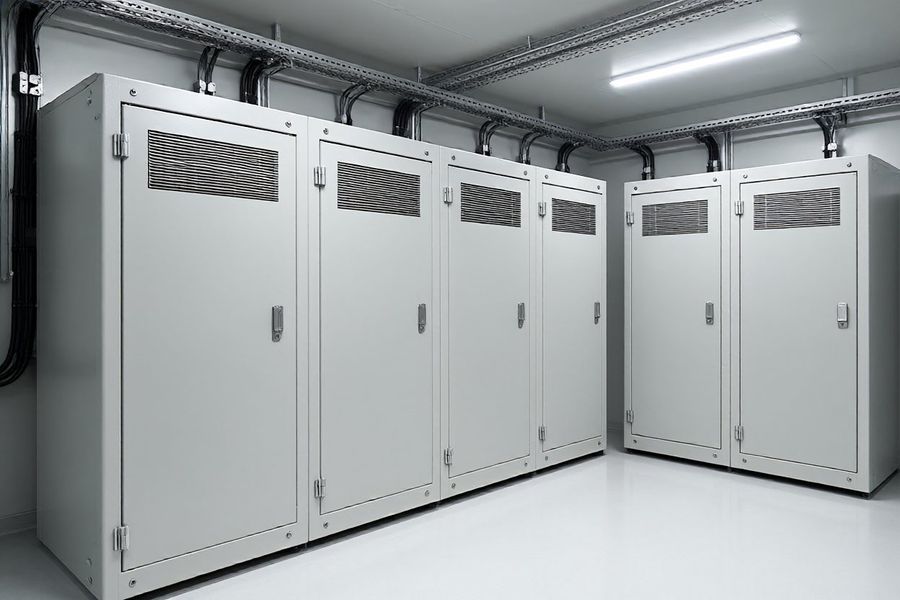
Battery storage cabinets in a technical room

From the workshop — the same drawing-led process on every build.

WHERE IT IS INSTALLED

Applications and
what drives each one.

The same product behaves differently depending on where it goes. These are the installations we build for and the constraint that shapes each.

01

Commercial and industrial BESS rooms

Racks of battery cabinets inside a building, where the constraints are floor load rating, fire strategy and thermal management in a closed room. Cabinet dimensions follow the module and the room rather than a shipping container.

02

Renewable energy co-location

Storage cabinets beside a solar or wind installation, often in an unheated or outdoor enclosure. Temperature cycling and condensation become the main environmental concerns rather than heat alone.

03

Telecom and UPS backup rooms

Smaller battery cabinets providing ride-through for communications or IT equipment. Load is modest but service access is frequent, so rack design favours easy module extraction.

04

Container-based systems

Where the storage sits inside a container, the cabinet is often a racking structure rather than a sealed enclosure. The thermal design then moves to the container, and the cabinet’s job is load and service access.

QUESTIONS

What buyers ask
about this product.

How much weight can the rack structure carry?

Give us the module weight and the number of tiers and we size the supports and base to suit. The load figure is confirmed on the drawing before production — we do not quote a rack capacity we have not calculated for your module.

Do you supply the fans or heat exchangers?

We fabricate the provisions: louver panels, fan mounting cutouts, heat-exchanger openings and duct flanges. The fans and exchangers themselves are normally supplied to your specification.

Is stainless needed for an outdoor battery cabinet?

Not always. Powder-coated galvanized steel handles most sheltered outdoor locations. 304 or 316 is the answer where chlorides, salt air or wash-down are present, or where the coating cannot be maintained over the service life.

Can the cabinet be built to ship in sections?

Yes, for units that exceed container dimensions. Bolt-together sections are designed at drawing review so the joints stay rigid once assembled and the alignment of the racks is preserved.

How is condensation handled in an unheated room?

Condensation comes from temperature cycling. The usual approach is a breathing element or a membrane vent plus a drain at the low point, sized against the climate and the equipment heat load at that location.

START A PROJECT

Send the drawing.
Get the findings back.

Engineering reviews manufacturability and returns the open questions with the quotation — before you commit to production.