OEM sheet metal manufacturing · Dongguan, Chinasales01@xinghaoxin.comTalk to our team ↗
Outdoor Electrical Cabinets
CUSTOM XHX ENCLOSURE

Outdoor Electrical Cabinets

Weather-ready cabinet systems for power, controls and field equipment.

  • Free DFM review
  • From 1 piece
  • ISO 9001 quality system
  • Quote with findings

Built to your drawings · OEM / ODM · Dongguan, China

OUTDOOR POWER & CONTROL CABINETS

Outdoor cabinets that
outlast the weather.

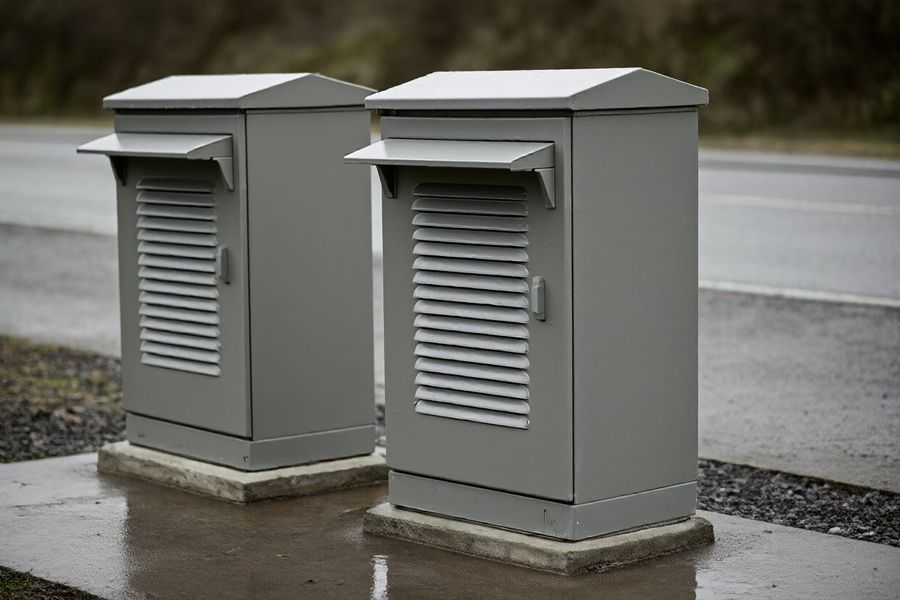
A cabinet standing on a concrete base beside a road, a pump station or a substation sees everything the climate can produce: driven rain, dust, UV, freeze-thaw and a technician who opens it twice a year. The enclosure cannot be judged on a showroom photo — it has to be judged on what it still looks like after five winters.

What it is built to do

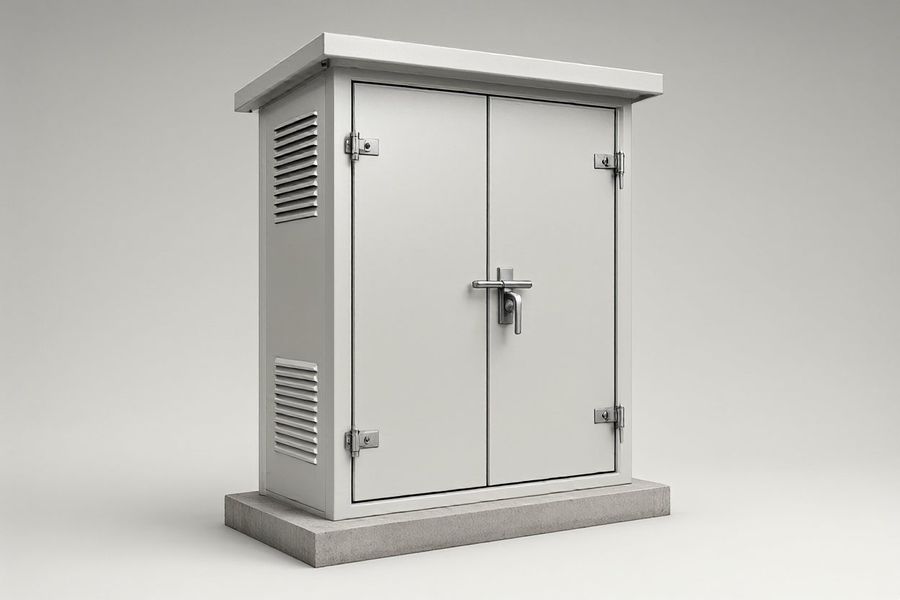
These are free-standing or wall-mounted steel cabinets for distribution boards, control gear, metering and field instrumentation that cannot be brought indoors. We fabricate them as a rigid welded structure rather than a bent box: a load-bearing frame, a door with a reinforced return, a top that sheds water rather than pooling it, and a gasket channel that survives years of opening and closing.

Why the frame matters more than the wall thickness

A cabinet that sags on its hinges after two seasons leaks no matter how good the gasket is. The frame carries the door weight, the mounting plate and the equipment; the skin only has to keep weather out. That is why our outdoor builds specify a welded frame with bracing, and why the door return is formed rather than bent flat — it holds a gasket evenly all the way round.

How the build is decided

Your drawing fixes the equipment layout, and the environment fixes everything else. We review the exposure, the protection target, the cable route and the maintenance access together, then agree the construction before cutting. If something in the drawing will not survive the installation — a flat top in a snow-load area, a single-point latch on a 1.6 m door — engineering says so with the quotation.

Outdoor electrical distribution cabinet with louvered vents and rain hood

MATERIAL SELECTION

Choosing the material
for the real exposure.

The grade is decided by where the enclosure lives and how it is cleaned — not by what is cheapest on the day.

Galvanized steel (SGCC) — the default

Hot-dip galvanized sheet with a powder coat on top handles most sheltered and semi-exposed outdoor locations. The zinc layer protects cut edges where the coating cannot reach, which matters on a cabinet that will be drilled during installation.

Best for: car parks, equipment rooms, roadside cabinets, inland locations

304 stainless — coastal without salt spray

Used where wash-down or moderate chlorides are present: food factories, water treatment, coastal locations set back from the shoreline. We normally supply it brushed rather than painted, so a scratch does not become a visible defect.

Best for: wash-down areas, water treatment, near-coast installations

316 stainless — salt air and chlorides

The correct grade where salt spray, de-icing salt or chloride-bearing process atmosphere will reach the cabinet. Noticeably more expensive than 304, so it is specified against a real exposure rather than added as insurance.

Best for: shoreline, marine, de-icing salt exposure

Aluminium — weight-limited locations

Chosen when the cabinet has to be lifted by hand onto a pole or a roof, or when the mounting structure cannot take steel. Anodized or powder coated to match the rest of the installation.

Best for: pole-top, rooftop, weight-restricted mounting

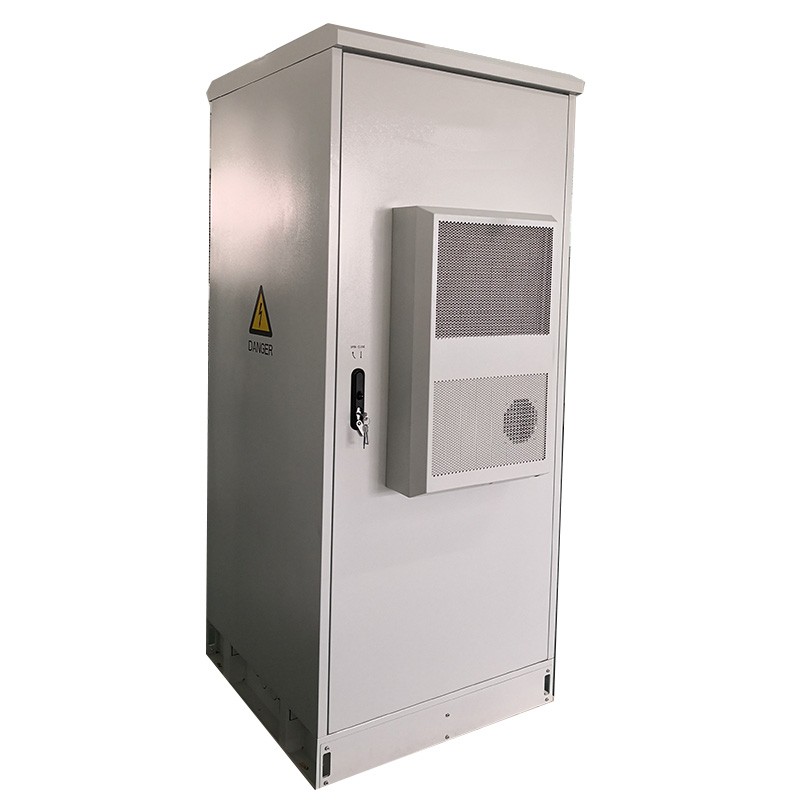
Outdoor electrical cabinets installed during installation

From the workshop — the same drawing-led process on every build.

WHERE IT IS INSTALLED

Applications and
what drives each one.

The same product behaves differently depending on where it goes. These are the installations we build for and the constraint that shapes each.

01

Roadside and highway cabinets

Traffic control, ANPR and communications equipment in cabinets that take wind load, vehicle spray and occasional impact. Doors are usually double-skinned and the plinth is designed to keep the base out of standing water.

02

Water and wastewater facilities

Pump control and telemetry cabinets in an atmosphere that is permanently damp and often corrosive. The specification usually moves to 304 or 316, with attention to drain paths and to gaskets that do not grow mould.

03

Industrial yards and equipment rooms

Distribution and control cabinets in a yard where dust and vibration are the main enemies. Welded frames and sealed entries matter more than rain protection, and lifting points are designed in.

04

Renewable energy locations

Inverter and combiner cabinets on solar farms and wind locations, where the cabinet sees full sun, temperature cycling and no maintenance visit for months. Thermal provision usually drives the design here rather than water ingress.

QUESTIONS

What buyers ask
about this product.

Can you build to a named NEMA or IP rating?

Tell us the target on the drawing and the gasket, louver and gland arrangement is designed to suit it. The rating is confirmed against the final design at drawing review, and we say so plainly if a target needs a different construction rather than quoting around it.

How do you stop condensation inside a sealed cabinet?

Condensation comes from temperature cycling, not from leaks. The usual answer is a breathing element or a small vent with a membrane, plus a drain at the low point. We size it against the equipment heat load and the climate at that location.

What size can you go to?

Up to 3,000 mm on the longest dimension as a single piece. Larger assemblies are built as bolt-together sections that ship within container limits and are assembled during installation.

Do you supply the internal mounting plate and rails?

Yes — back plates, DIN rails, cable entry plates, earth points and brackets can all be part of the build. Mark them on the drawing and they are included in the quotation.

How is the finish protected before it reaches the installation?

Protective wrap on finished faces, corner protection, and export-grade packing for sea freight. Prototypes can ship by air when the schedule is tight.

START A PROJECT

Send the drawing.
Get the findings back.

Engineering reviews manufacturability and returns the open questions with the quotation — before you commit to production.