2 × 6 kW
Two fibre lasers, so a second panel starts while the first is still on the table.
 Request a quote ↗
LASER CUTTING
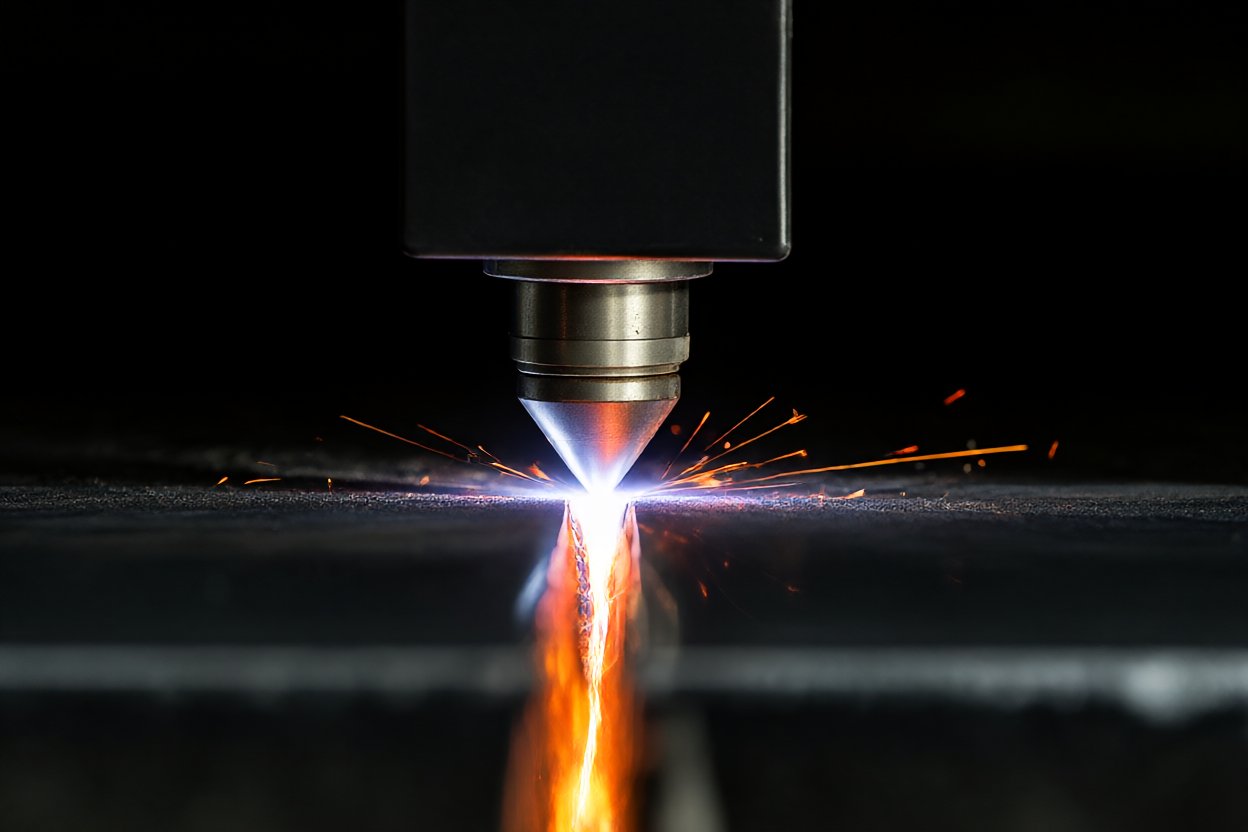
Two 6 kW fibre lasers cut profiles, openings and cut-outs directly from the file. No press tooling, no setup charge per shape — which is why a one-off modification and a five-hundredth panel cost the same to cut.
2 × 6 kW fibre · ±0.01 mm · up to 12 mm
CUTTING CAPACITY
These are the numbers the machines run to, not the numbers on the brochure. Anything outside them gets reviewed before it gets quoted.
Two fibre lasers, so a second panel starts while the first is still on the table.
Positioning accuracy of the cutting head. Finished part tolerance is stated per drawing.
Mild steel. Stainless and aluminium run to a slightly lower maximum thickness.
Longest panel in a single piece. Longer parts are designed as two joined sections.
HOW THE CUT IS SPECIFIED
Laser cutting is the most forgiving of the six processes and the easiest to specify badly. These are the points that decide whether the panel that arrives matches the panel you designed.
Mild steel, galvanized steel, 304 and 316 stainless, aluminium 5052 / 6061. Each behaves differently: stainless needs nitrogen assist to keep the edge bright, mild steel runs on oxygen and leaves a slightly oxidised edge that is normal and does not affect the coating.
0.5 mm to 12 mm in mild steel. Stainless and aluminium run to a lower maximum. Below 0.5 mm the panel distorts too easily to hold a flatness callout without a fixture.
±0.01 mm on the cutting head. That is the machine, not the part: the tolerance written on the drawing is what the finished panel is inspected against, and it has to account for material movement during cutting.
Roughly equal to the material thickness for a clean hole, smaller with reduced speed. A hole much smaller than the thickness comes out tapered and is usually better drilled or turret-punched afterwards.
Keep at least one material thickness between a hole and an outside edge, or the ligament between them distorts and the edge no longer measures straight.
Sharp internal corners concentrate heat and leave a small notch. A radius of half the material thickness costs nothing to add and removes a stress riser that would otherwise show up as a crack at the powder coating step.
Parts are nested to use the steel sheet efficiently, which is what keeps the material cost down on a repeat panel. If the rolling direction or the brush direction matters, say so — nesting will otherwise ignore it.
A laser edge is clean and square, with a light oxide layer on mild steel. It is not a machined edge. Where an edge will be handled or is visible, it is deburred and, if the part is coated, the coating wraps it.
WHAT MAKES A CLEAN CUT
None of these are exotic. Each one is cheaper to change in the file than to correct after the panels are cut.
01
The cut removes about 0.2 mm of material. The nesting software offsets the path to allow for it, but a dimension drawn to the cut line rather than to the finished edge will come out undersized.
02
A slot narrower than the material thickness cuts slowly and often bells at the ends. Design the slot at least as wide as the material is thick.
03
On material under 1 mm the panel can bow between cuts. Long unsupported spans are the usual cause, and a stiffening rib or a slightly thicker grade solves it.
04
A tapped hole in a laser-cut opening needs a pilot smaller than the thread. State the thread and it is cut at the tapping size rather than at the nominal diameter.
05
Two holes that must align across a bend have to be dimensioned from the same datum. Dimensioned from opposite edges, they accumulate the tolerance twice.
WHAT THE CUT GIVES YOU
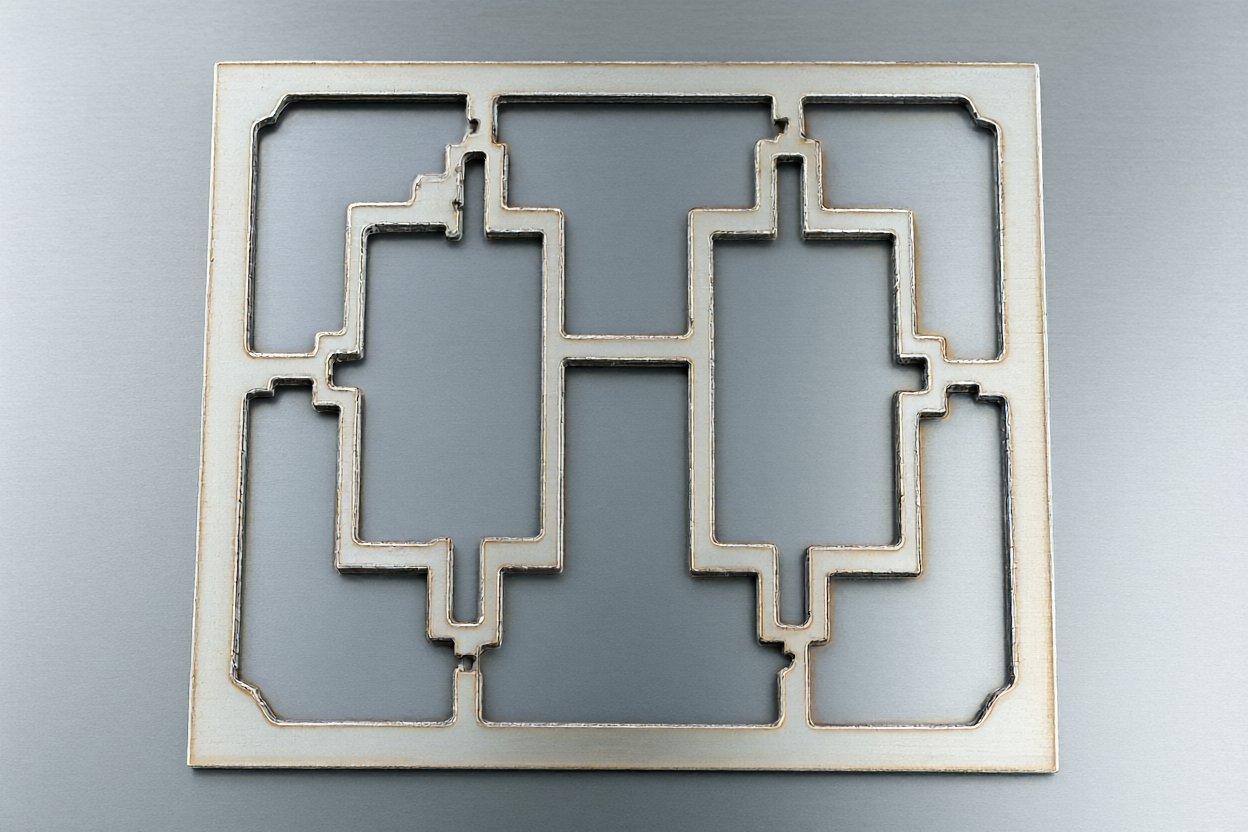
Because there is no press tooling, a laser cut has no setup cost per shape. A single prototype panel and the five-hundredth panel of a repeat order are cut from the same file by the same process, so the first one is a genuine preview of the last.
That changes how a project can be run. Design changes between the sample and the run cost a file edit rather than a tooling modification, so revisions stay cheap deep into development.
The trade-off is per-part speed on long runs. Once a mounting pattern repeats in the hundreds, the turret press is faster and cheaper per hole than tracing each one with the laser — which is why both sit in the same building.
NEXT STEP
Send a DXF or STEP file with the material and thickness. We will return the cutting review with the quotation.
SEND DRAWINGS
Share the drawings or the dimensions you have. Engineering reviews them and returns the findings with the quotation — usually within one working day.